
Genomic selection (GS) is a breeding method that uses DNA information to predict the genetic merit of animals, particularly in cattle, accelerating genetic progress and improving traits like milk production, health, and reproduction. It has revolutionized dairy cattle breeding by enabling faster and more accurate selection of superior animals.
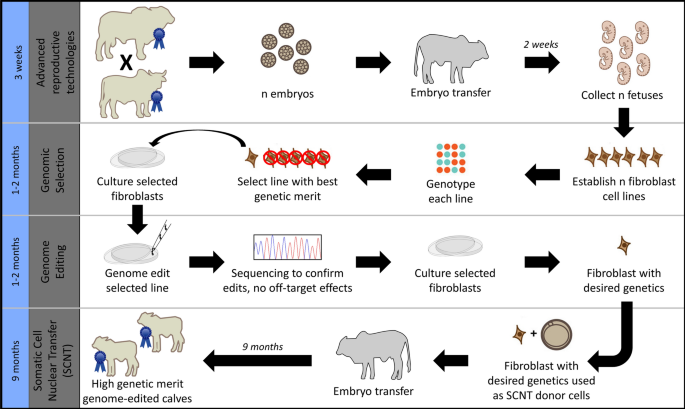

GS uses DNA markers (like single nucleotide polymorphisms or SNPs) to identify animals with desirable genes for specific traits.

A reference population of animals with both DNA and detailed phenotypic data (like milk production records) is used to train prediction models.

These models estimate GEBVs, which are predictions of an animal’s genetic merit based on its DNA.

Animals with high GEBVs are selected for breeding, leading to faster genetic gain.
GS allows for earlier selection of young animals (even before they produce offspring) and reduces generation intervals, leading to more rapid genetic improvement.
GS can identify animals with favorable genes for disease resistance and reproductive traits, leading to healthier and more productive herds.
Genomic selection can help improve feed efficiency, reduce methane emissions, and improve overall herd health, contributing to more sustainable dairy and beef production according to The DNA Universe.
GS provides more accurate predictions of an animal's genetic merit compared to traditional methods, especially for traits that are difficult or expensive to measure (e.g., disease resistance, feed efficiency).
By identifying superior animals earlier, GS can reduce the costs associated with raising and testing animals that may not be as productive.
GS can be used for mating, culling, and other herd management decisions, helping producers optimize their operations.
In the US, genomic selection has significantly increased genetic gain for production and fitness traits like fertility and udder health, according to CDCB.
GS is also being used to improve growth, reproduction, carcass traits, feed efficiency, and other traits in beef cattle, especially in tropical breeds according to ScienceDirect.com.
Genomic selection is increasingly being used in tropical breeds of cattle like Nellore to improve traits relevant to their environment and production systems.
Genomic selection boosts cattle traits across dairy, beef, and tropical breeds while tackling key challenges.
Accurate GEBVs require large and diverse reference populations. Continued efforts are needed to expand and improve these populations.
While costs have decreased, genotyping can still be a limiting factor for some producers.
Combining GS with other technologies like artificial insemination and gene editing can further accelerate genetic progress.
GS can help maintain genetic diversity and prevent inbreeding, but careful management is crucial.
Continuous monitoring and evaluation of GS programs are essential to ensure their effectiveness and adapt them to changing needs.
At Sandoval Sandhill Ranch, excellence in cattle breeding grows through vision and dedication, shaped by heritage and lasting impact.