
In-vitro fertilization (IVF) in cattle is a process where eggs are collected from a donor cow, fertilized in a laboratory, and the resulting embryos are then transferred to recipient cows for gestation. This technology allows for the production of more embryos from a donor cow, potentially accelerating genetic improvement in a herd.
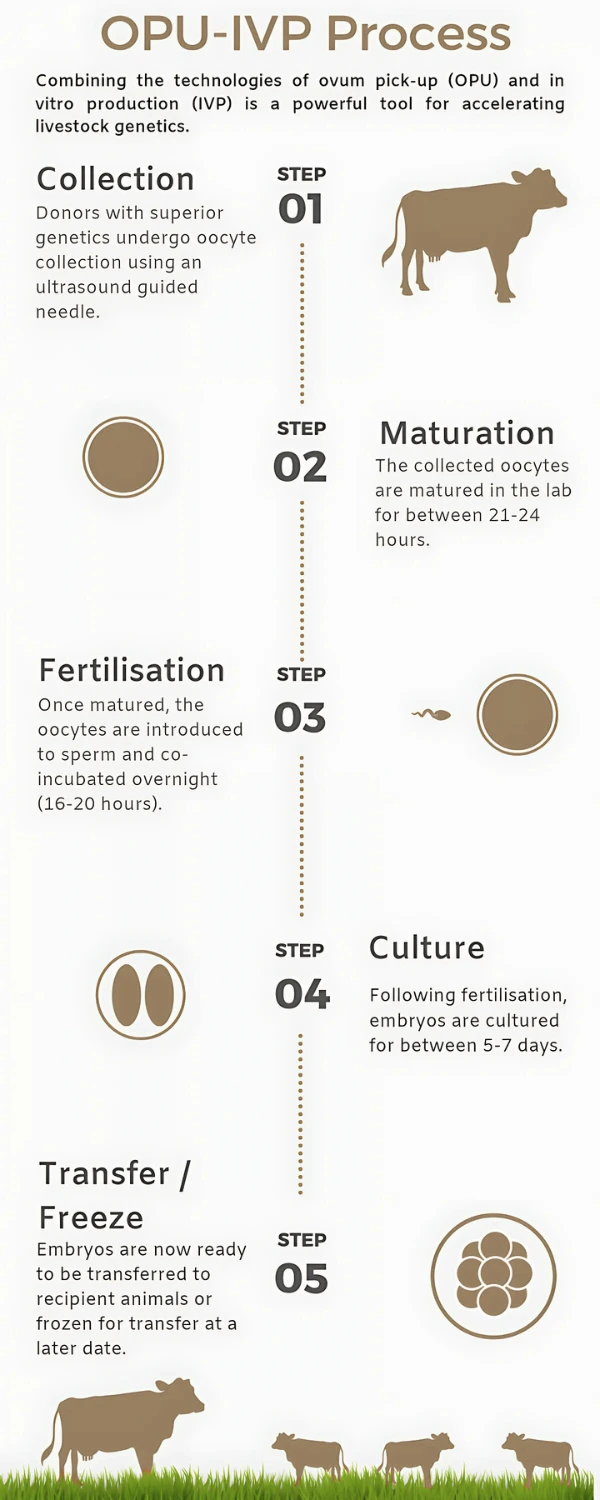
IVF allows for the collection of more oocytes than traditional methods, potentially leading to more embryos per donor.
IVF enables faster genetic progress by allowing the use of valuable genetics from both young heifers and older cows.
IVF can efficiently utilize semen from bulls with limited availability or sexed semen, which may be more expensive.
IVF can be more cost-effective than traditional embryo transfer in certain situations, especially when dealing with low embryo production donors or when maximizing the use of a single semen straw.
Multiple sires can be used on a single donor aspiration, allowing for more diverse genetic combinations.
Embryos produced through IVF may not be as robust as those developed in vivo, potentially leading to lower pregnancy rates and challenges with cryopreservation.
In rare cases, IVF can be associated with "Large Offspring Syndrome," where calves are born with unusually large birth weights.
At Sandoval Sandhill Ranch, excellence in cattle breeding grows through vision and dedication, shaped by heritage and lasting impact.